Eagle Spray Foam Insulation
Open-Cell Spray Foam Insulation in Eagle, ID
Open-cell spray foam insulation in Eagle, ID for interior walls, attic floors, and sound control. Free estimates.
- 15+ Years local experience
- 500+ Projects completed
- Licensed & Insured
Serving Eagle and nearby communities.
Treasure Valley summers push dry heat into attics and interior walls, then winter flips it cold fast. Open-cell foam handles interior cavities well in that swing, filling the space fully while staying lighter and more budget-friendly per inch than closed-cell.
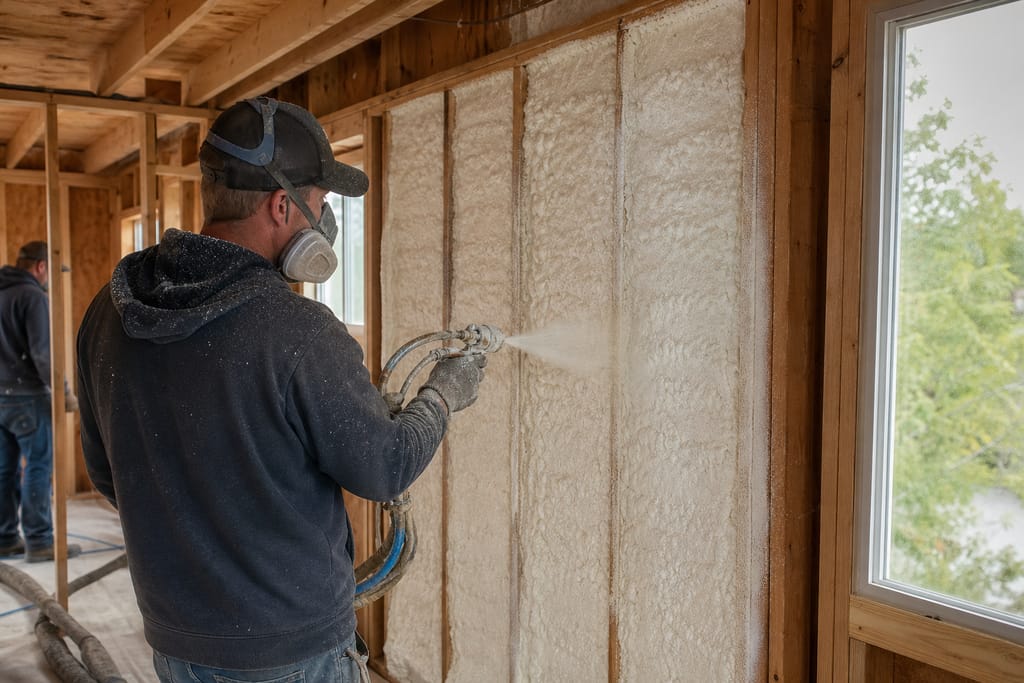
Open-Cell Spray Foam Insulation is the material Eagle Spray Foam Insulation reaches for on interior partition walls, attic floors, and anywhere sound dampening between rooms matters as much as temperature control. It's a common pick in Eagle's larger custom homes where interior noise transfer between floors is a real concern.
What's included
What's Included with Open-Cell Spray Foam Insulation
Typically included: surface prep and masking, low-pressure foam application to the cavity, expansion monitoring, trimming flush to framing, debris cleanup.
Optional: low-VOC formula upgrade, acoustic-focused foam blend for interior sound walls.
Customer prep: clear furniture from the work area, note any sensitivity to off-gas smell during cure, plan to be out of the space for a few hours.
Want a clearer scope?
Get a Free EstimateOpen-Cell Spray Foam Insulation
Open-Cell Spray Foam Insulation Install Process
- Space Preparation — Surfaces are cleaned and masked to ensure clean application of open-cell foam.
- Low-Pressure Spraying — Foam is applied using low-pressure equipment suited for lightweight open-cell formulations.
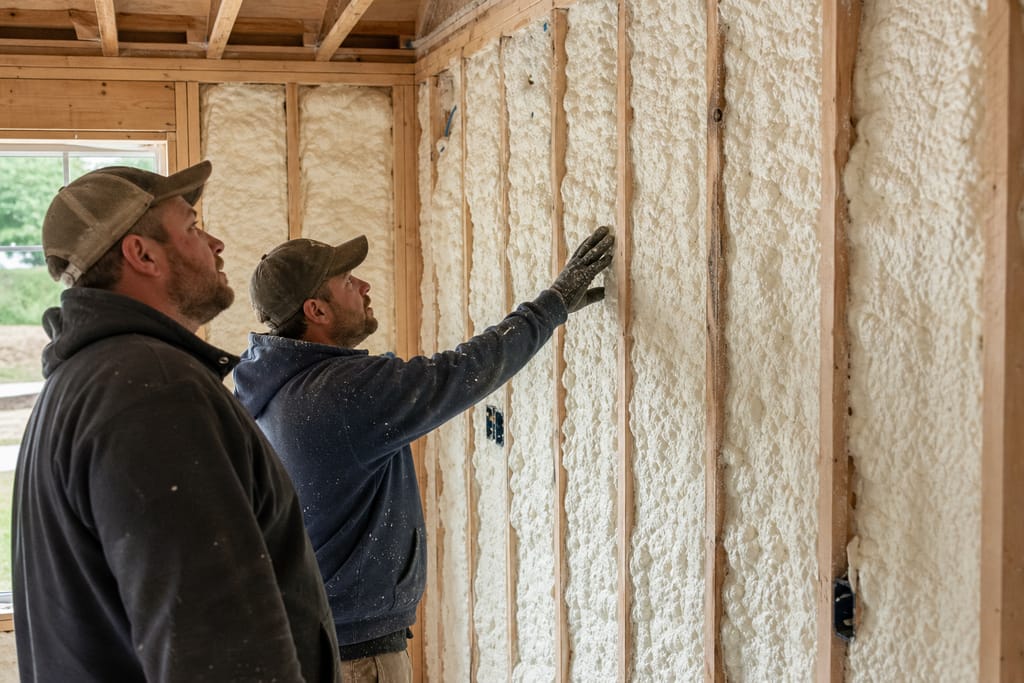
- Expansion Monitoring — Technicians observe foam expansion to ensure even coverage across all cavities.
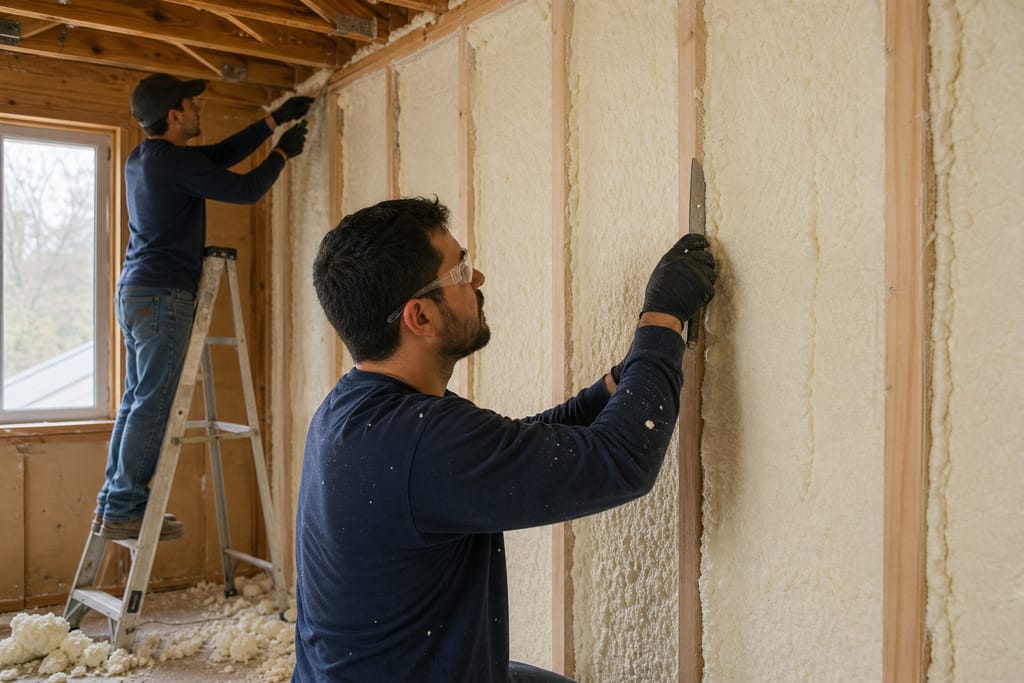
- Trimming Excess Foam — Overexpanded foam is trimmed flush to framing for a clean, finished appearance.
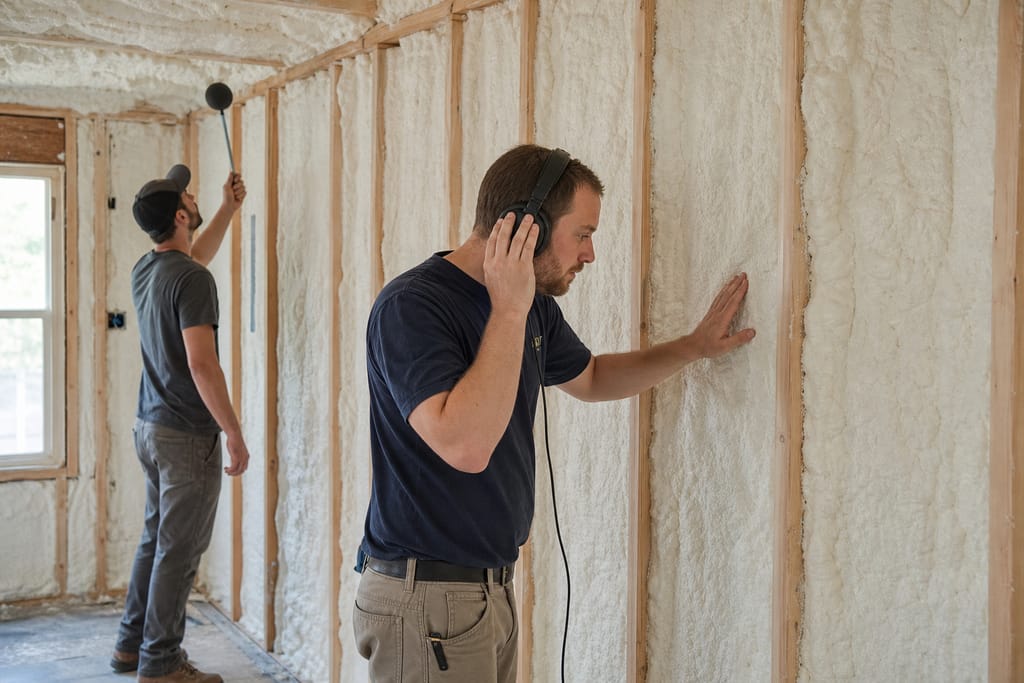
- Sound Dampening Check — We verify the foam's acoustic performance in walls and ceilings where applicable.
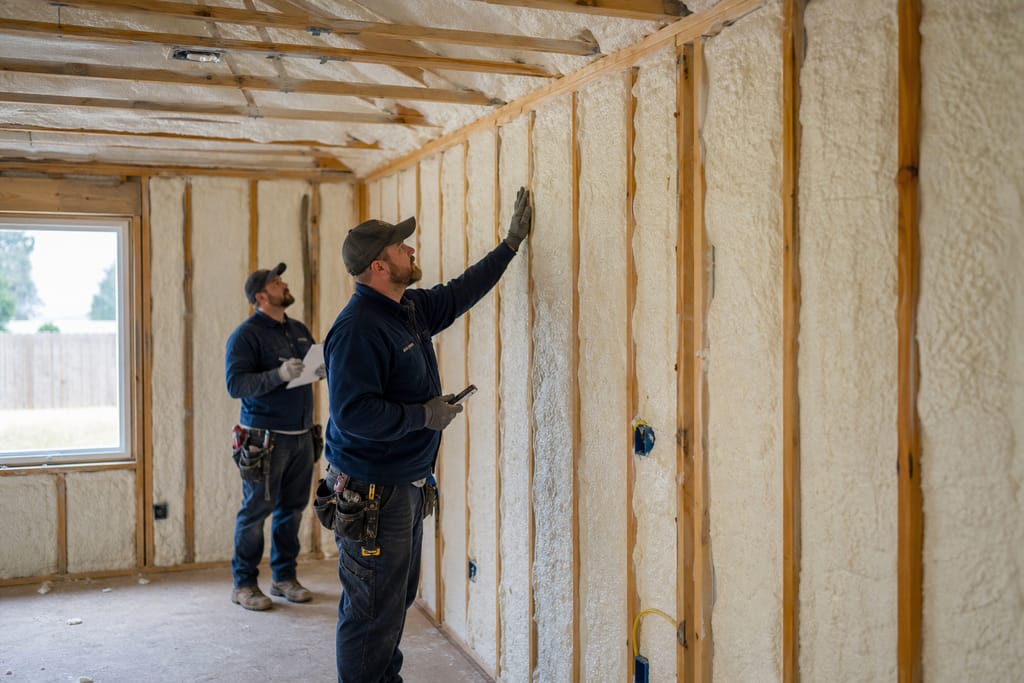
- Final Coverage Review — A complete review confirms consistent thickness and full cavity fill throughout the space.
Questions about this?
Get a Free EstimateMaterials
Materials and Methods for Open-Cell Spray Foam Insulation
Open-cell fits best in interior walls and attic floors. Here's what goes into that work.
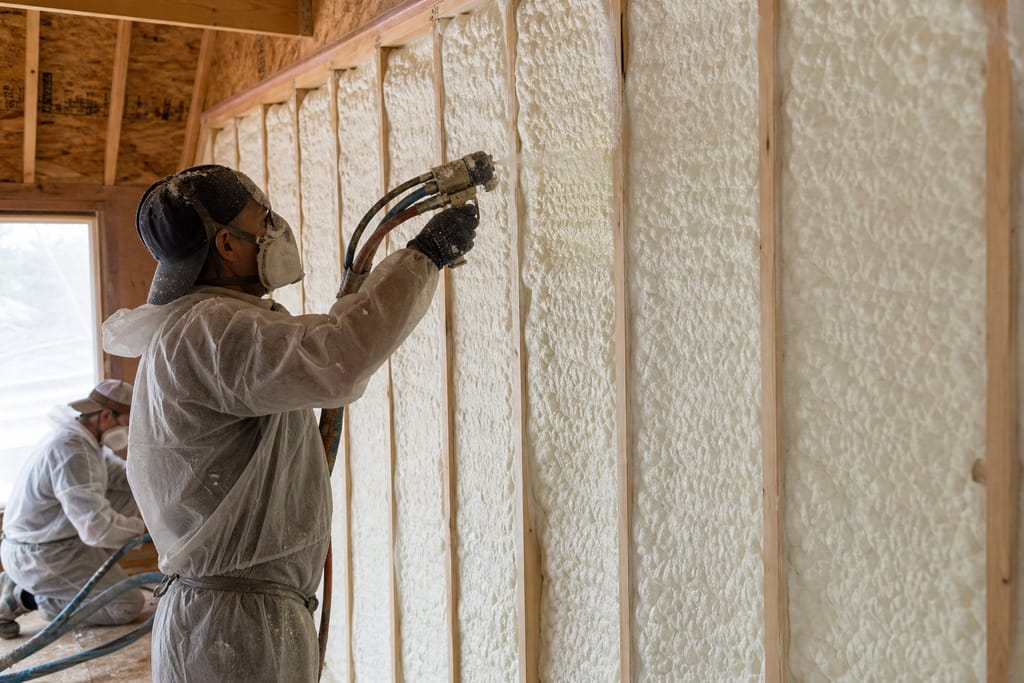
Standard Open-Cell Foam
Soft and fully expanding, good for filling interior wall cavities and attic floors without the cost of closed-cell.
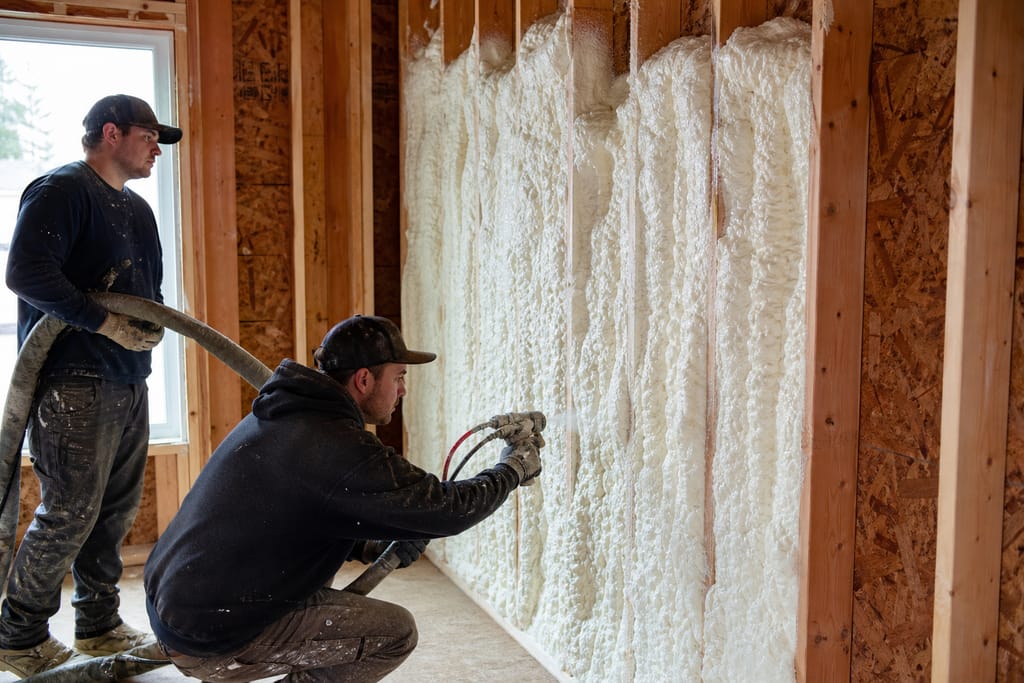
Low-VOC Foam Formula
A cleaner-smelling option for homeowners sensitive to off-gas odor during the cure window.
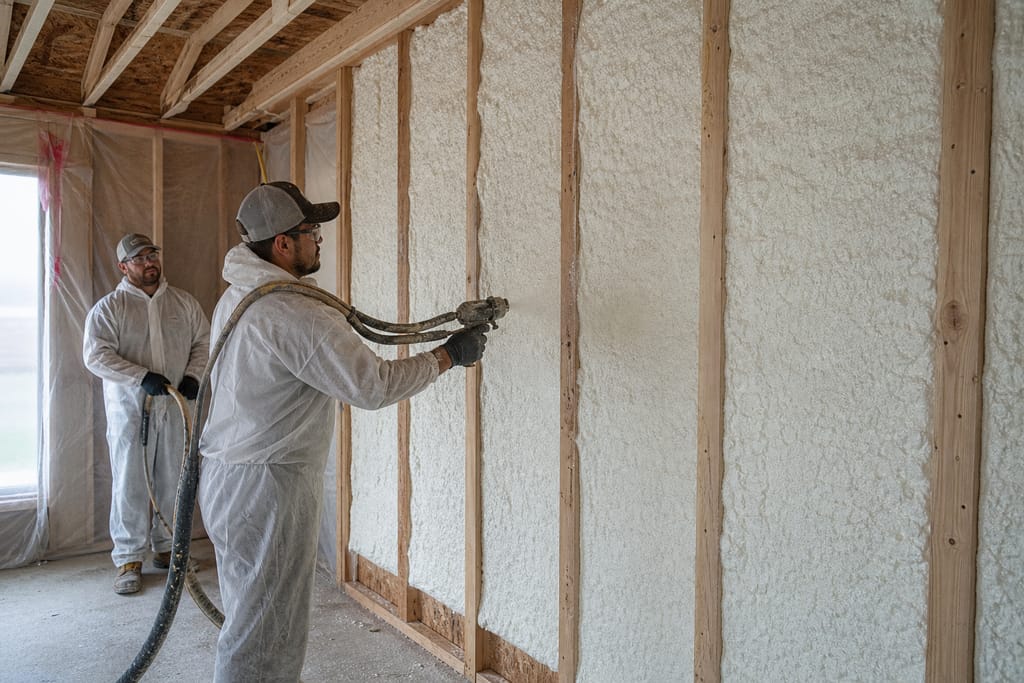
Acoustic Foam Blend
Tuned for sound dampening, useful between bonus rooms and bedrooms in two-story custom builds.
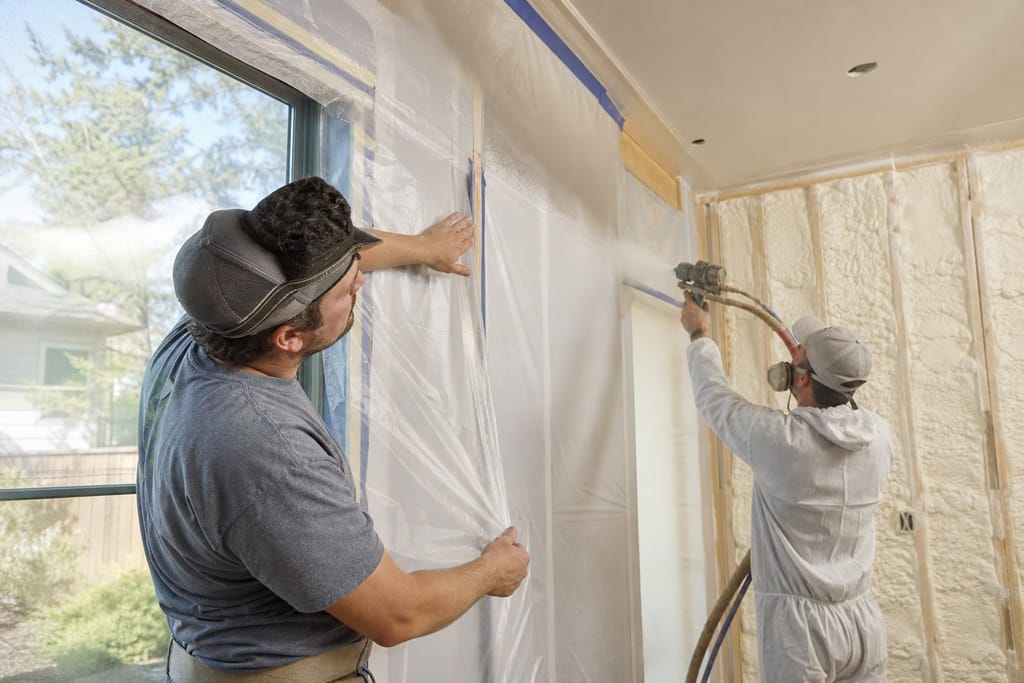
Flexible Masking Film
Protects floors and trim from overspray while the crew works a room.
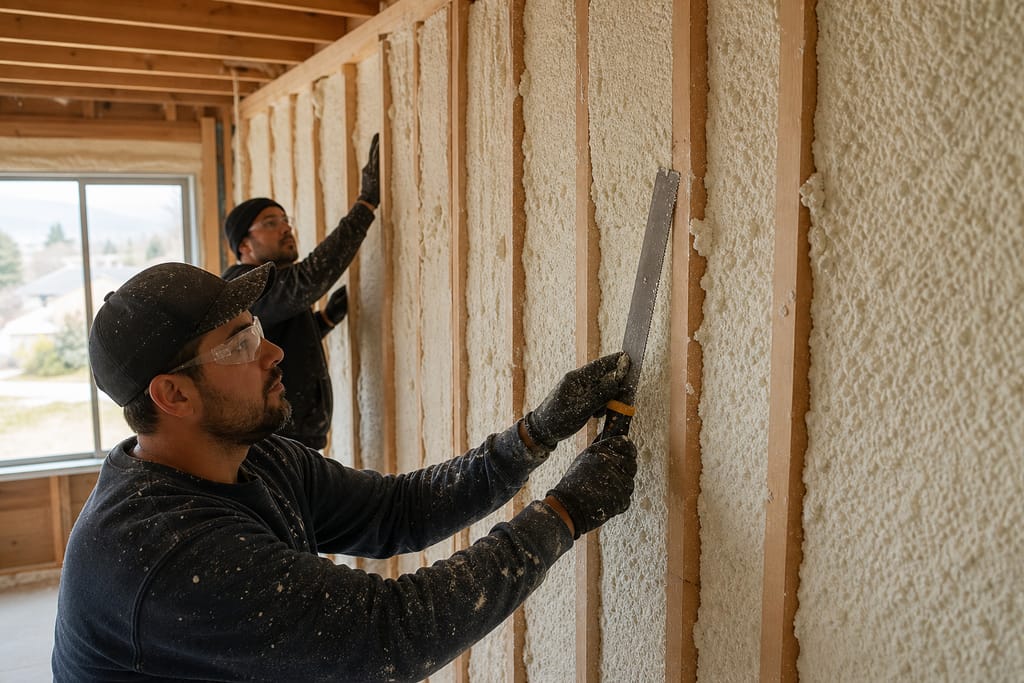
Trim Tools And Blades
Keep the finished surface flush and clean along every stud bay.
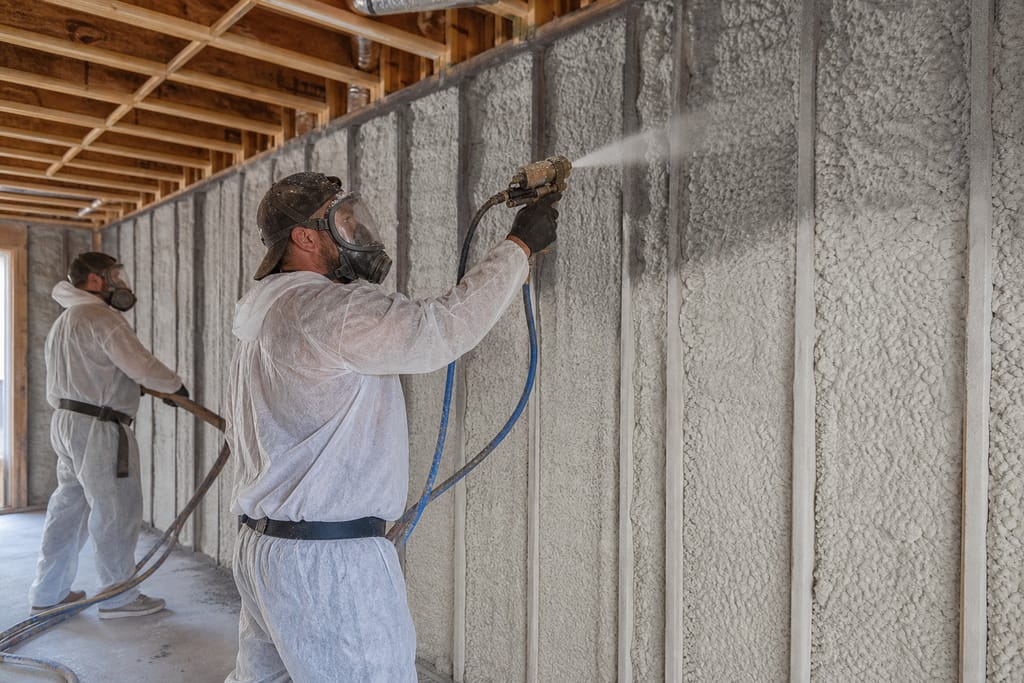
Fire-Retardant Spray
Applied as a topical treatment where open-cell foam is left exposed in unfinished spaces.
Questions on materials?
Get a Free EstimateFAQs
Open-Cell Spray Foam Insulation FAQs
How much does open-cell spray foam cost in Eagle?
Open-cell typically runs $0.45 to $0.90 per board foot, lower than closed-cell, with total cost tied to square footage and cavity depth.
What's the smell like after open-cell foam goes in?
There's an off-gas smell for the first day or two as it fully cures. It fades with ventilation and is generally mild compared to closed-cell.
How long do I need to leave during installation?
Plan to be out of the sprayed area for a few hours while application and initial cure happen, longer if ventilation is limited.
Is DIY open-cell spray foam a good idea?
Even though it expands at lower pressure than closed-cell, open-cell still needs rig-grade equipment for even coverage. Box kits tend to leave gaps.
When should I choose open-cell over closed-cell?
Interior partition walls, attic floors, and rooms where sound control matters are good fits. Below-grade or moisture-prone spaces usually call for closed-cell instead.
What affects open-cell foam pricing?
Square footage, cavity depth, and how accessible the space is all move the price.
Timeline
How long does a Open-Cell Spray Foam Insulation take?
- 01
Stage 1
A typical interior project moves quickly from prep to finished surface.
- 02
Consult and walkthrough
same day - 03
Masking and prep
1–2 hours - 04
Foam application
half dayfor most rooms
- 05
Cure and off-gas period
24 hoursbefore normal occupancy
Need a schedule that fits?
Get a Free EstimateBefore & after
Before and After Open-Cell Spray Foam Insulation
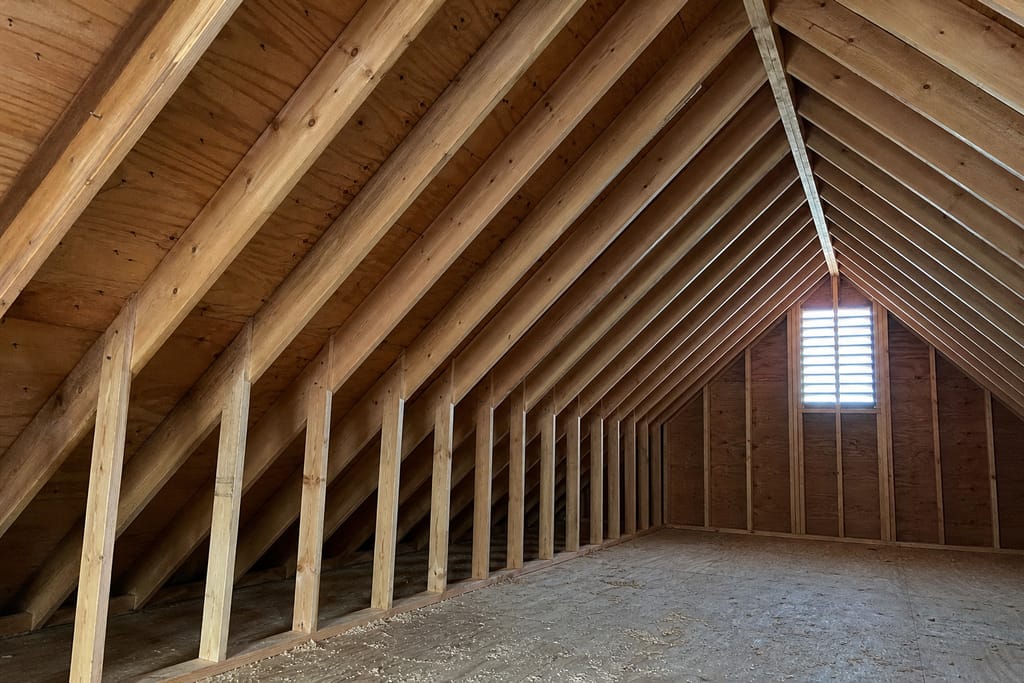
Before 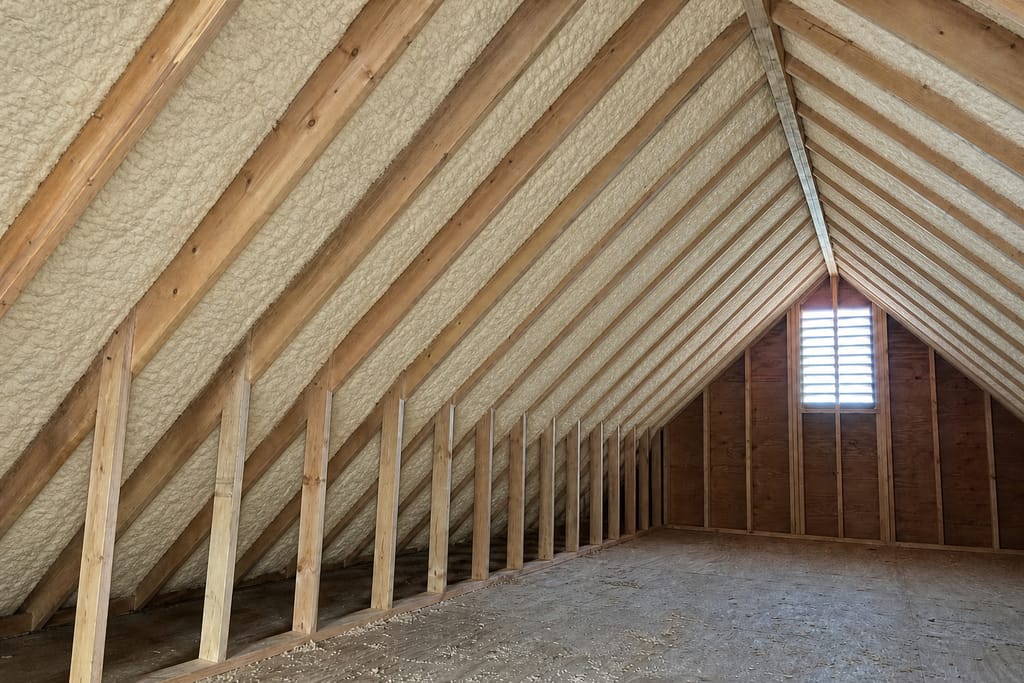
After
How it works
Our process
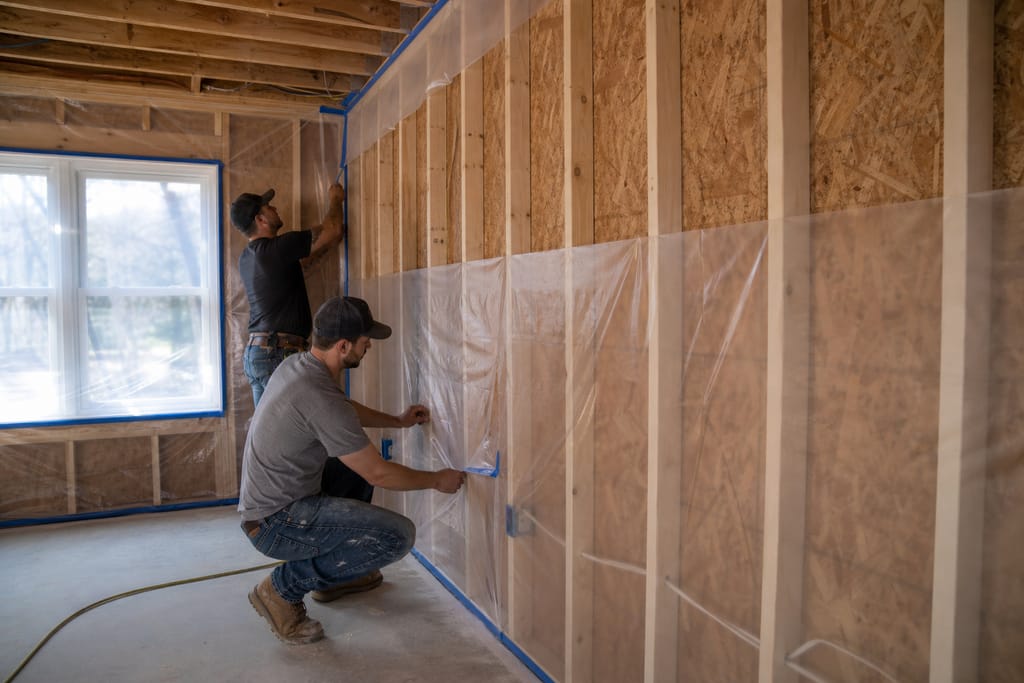 Step 1
Space Preparation
Surfaces are cleaned and masked to ensure clean application of open-cell foam.
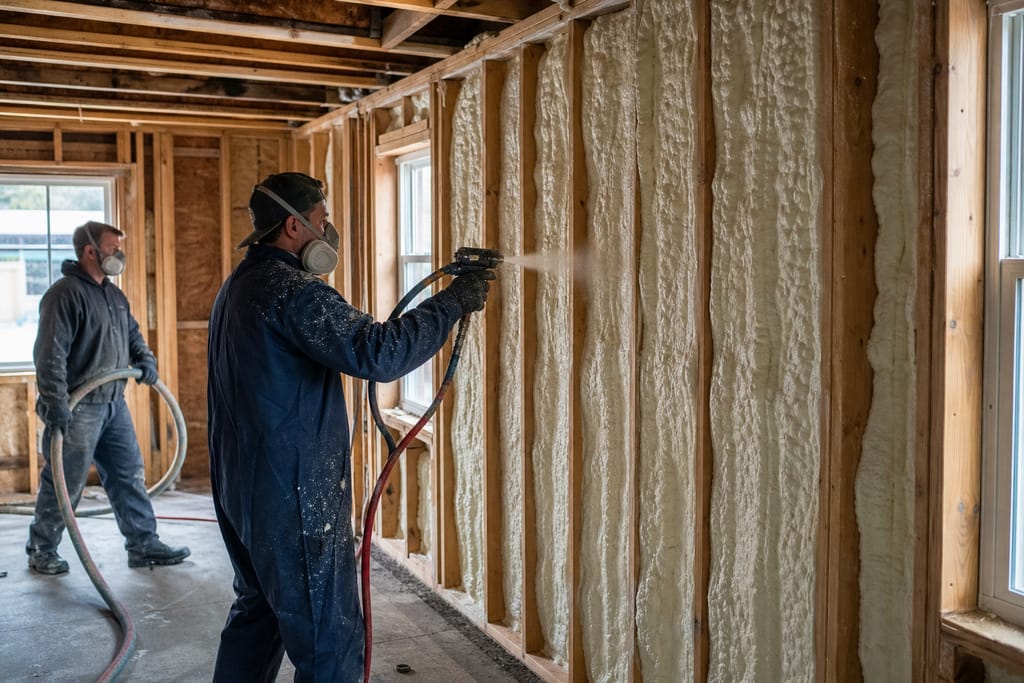 Step 2
Low-Pressure Spraying
Foam is applied using low-pressure equipment suited for lightweight open-cell formulations.
 Step 3
Expansion Monitoring
Technicians observe foam expansion to ensure even coverage across all cavities.
 Step 4
Trimming Excess Foam
Overexpanded foam is trimmed flush to framing for a clean, finished appearance.
 Step 5
Sound Dampening Check
We verify the foam's acoustic performance in walls and ceilings where applicable.
 Step 6
Final Coverage Review
A complete review confirms consistent thickness and full cavity fill throughout the space.
More services
Other Spray Foam Insulation services
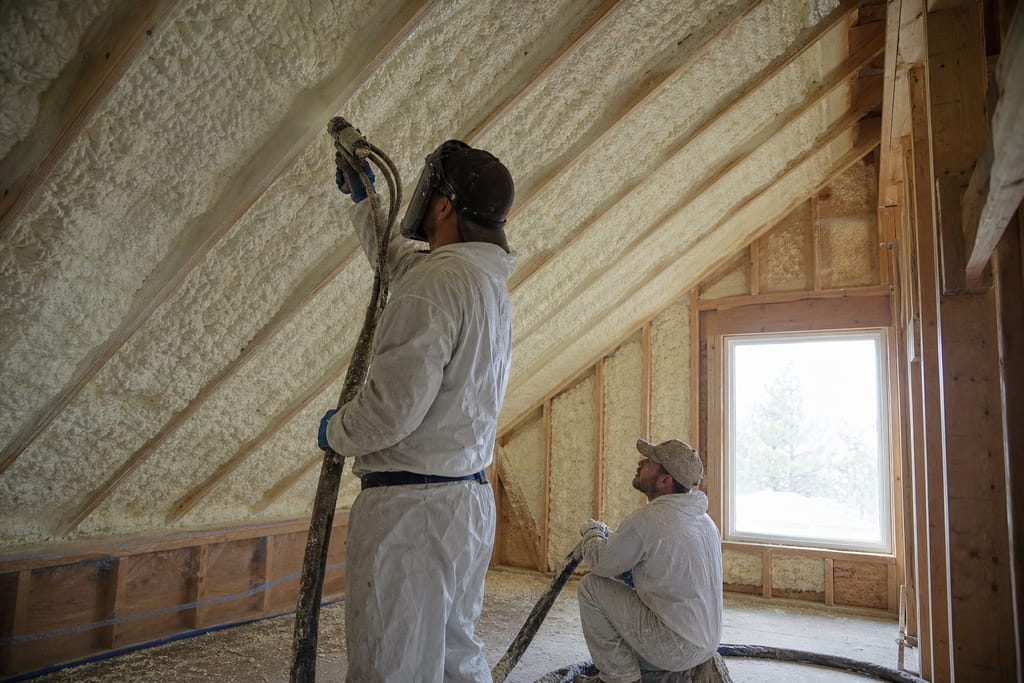
Attic Spray Foam Insulation
Attic spray foam insulation in Eagle, ID for roofline and attic floor jobs. Open-cell and closed-cell options. Free estimates.
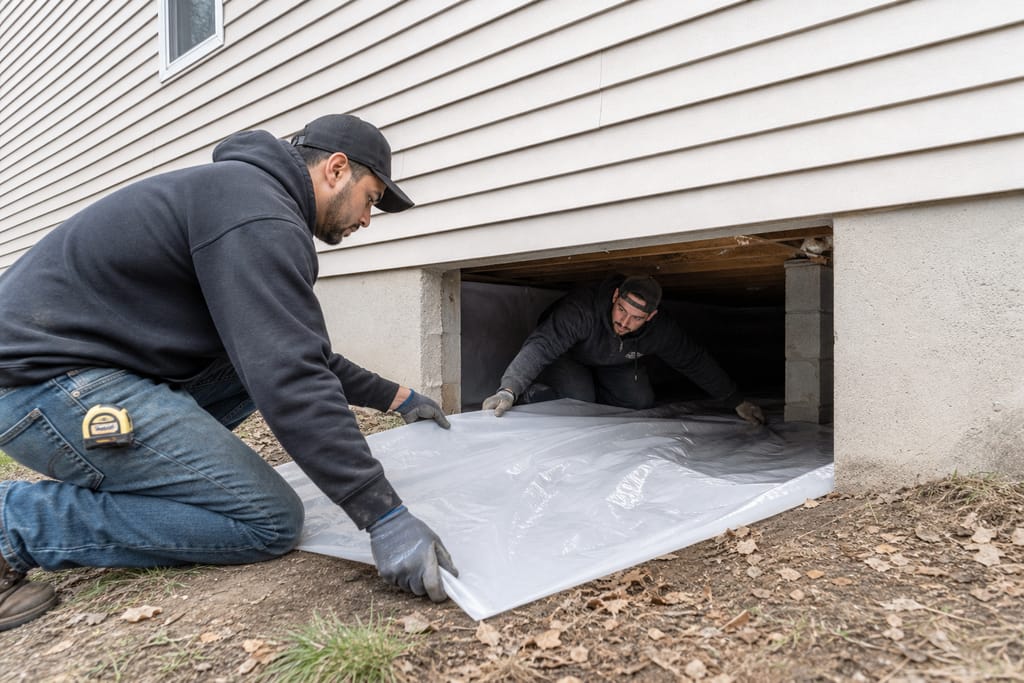
Crawlspace Encapsulation And Insulation
Crawlspace encapsulation and insulation in Eagle, ID for moisture control, rodent sealing, and closed-cell foam. Free estimates.
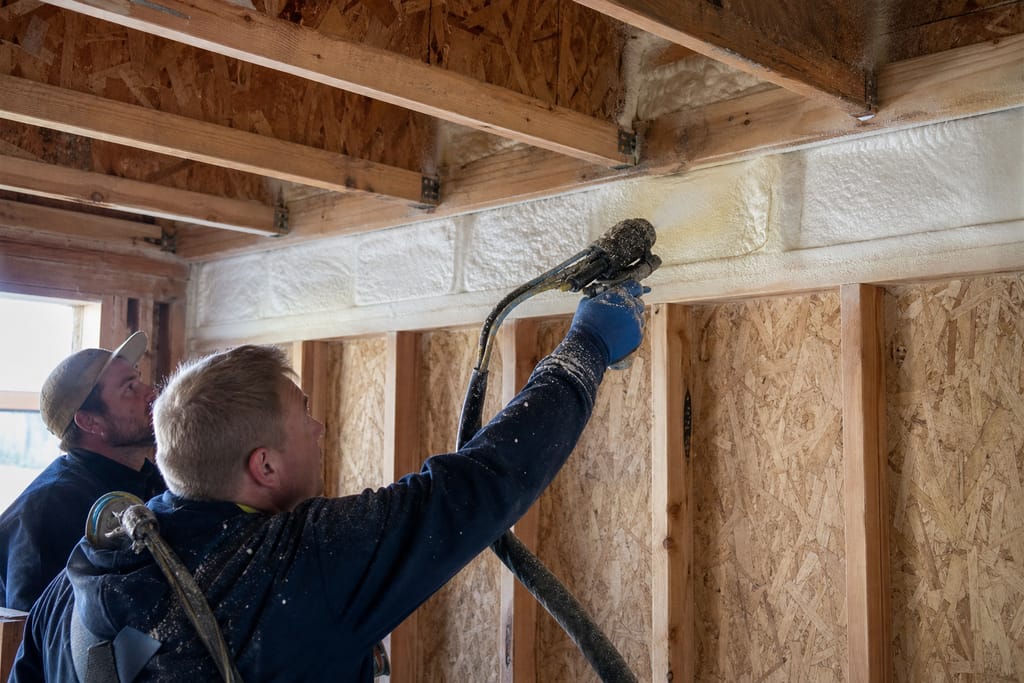
Closed-Cell Spray Foam Insulation
Closed-cell spray foam insulation in Eagle, ID for rim joists, crawlspaces, and shared walls. High R-value per inch. Free estimates.
Ask about Open-Cell Spray Foam Insulation
Tell us about the project and how to reach you.